 Skip to content

Draw predictions play an important role in football match analysis when fixtures appear balanced and unlikely to swing decisively in one direction. Rather than focusing on winners or high-scoring outcomes, this approach evaluates whether match conditions favor control, risk limitation, and shared scoring responsibility. By examining match ending in draw scenarios through tactical balance, tempo, and scoring behavior, analysts gain insight into low-scoring match predictions and recurring patterns such as 1-1 prediction trends. Platforms like FootballOddsPro frame draw analysis as part of outcome stability assessment, helping readers understand when equilibrium—not dominance—is the most realistic forecast.
What Draw Predictions Represent in Football Match Analysis
Draw predictions focus on identifying matches where neither team holds a decisive advantage. Rather than emphasizing attacking dominance, this approach evaluates balance, control, and risk limitation. The sections below explain how draws are interpreted within football match analysis.
A draw occurs when both teams finish a match with the same number of goals. From an analytical perspective, draws are not neutral results but reflections of equilibrium in chance creation, defensive organization, or strategic intent. Draw predictions therefore center on recognizing matches where teams are evenly matched or consciously manage risk to avoid defeat.
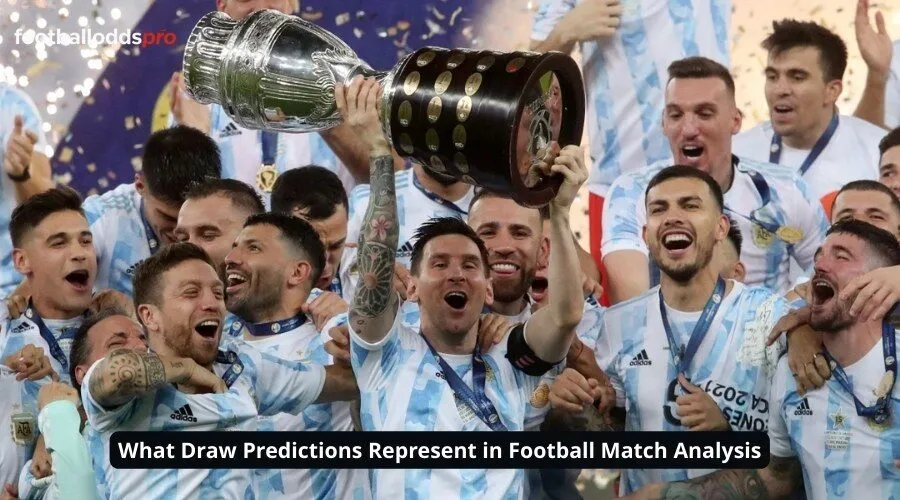
Draws are often categorized as low-variance outcomes because they typically emerge from controlled match environments. Teams limit exposure, maintain compact structures, and reduce transitions that could lead to decisive goals. As a result, match flow remains stable, with fewer extreme swings in momentum or scoring probability.
Unlike match winner analysis, which prioritizes identifying superiority, draw-focused evaluation emphasizes parity. The objective is not to determine which team is stronger, but whether conditions discourage separation. This distinction makes draw predictions particularly useful in fixtures where neither side benefits from structural or tactical advantage.
Key Match Conditions That Lead to a Draw
Not all matches are equally likely to end level. Certain match conditions consistently increase the probability of a draw, particularly when teams share similar strengths or adopt conservative approaches.
Balanced Team Strength and Tactical Parity
Fixtures between teams of comparable quality often produce draws. When both sides possess similar technical ability and tactical discipline, neither can consistently impose their game plan. This parity results in mutual containment, where chances are limited and evenly distributed.
Defensive Priorities Over Attacking Risk
Teams prioritizing defensive solidity frequently contribute to match ending in draw outcomes. By maintaining compact shapes and minimizing forward commitment, these sides reduce exposure to counterattacks. Even when opportunities arise, risk-averse decision-making can prevent matches from opening up.
Match Tempo and Game State Control
Tempo control is another key factor. Slower-paced matches with prolonged possession phases and few transitions tend to suppress scoring volatility. When teams manage game states carefully—especially after scoring or conceding—draw probability increases as both sides focus on stability rather than escalation.

The Role of Scoring Patterns in Draw Predictions
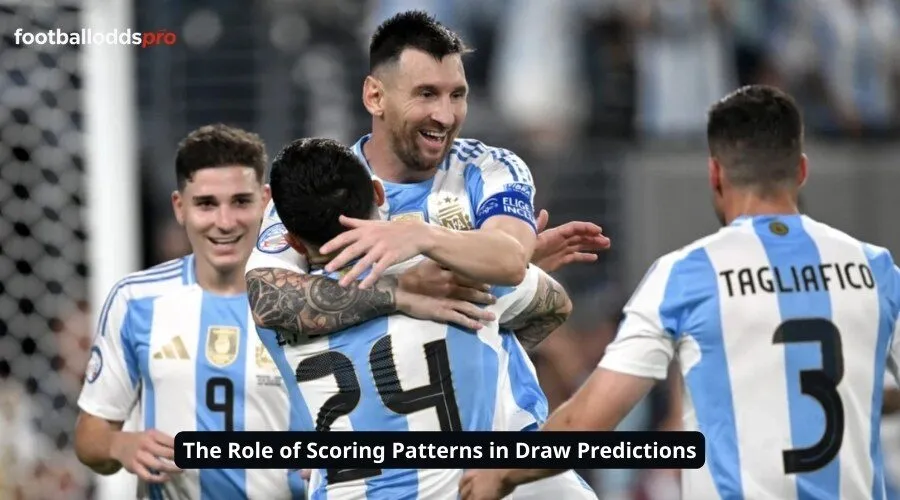
Scoring behavior plays a crucial role in determining whether a match is likely to end in a draw. Low goal frequency and symmetrical scoring patterns often signal increased draw probability. 1X2 predictionsWithin broader match outcome frameworks such as , these scoring signals help explain why the draw option gains relevance alongside home or away results.
Low-Scoring Match Predictions and Goal Distribution
Low-scoring match predictions are closely associated with draw outcomes. Matches featuring limited shot volume, cautious build-up, and restrained attacking commitment reduce the likelihood of decisive scorelines. When goals do occur, they are often balanced by an equal response from the opposing team.
Common Draw Scorelines and Their Significance
Certain scorelines recur frequently in draw analysis, particularly 0–0 and 1–1. A 0–0 draw often reflects extreme tactical caution or defensive dominance, while a 1–1 draw indicates shared attacking capability without sustained superiority. These patterns help contextualize how goals—or their absence—shape equilibrium.
1-1 Prediction Trends in Balanced Fixtures
Among draw outcomes, 1-1 prediction trends are especially prominent in balanced fixtures. This scoreline typically emerges when both teams can create chances but lack the efficiency or momentum to pull ahead. It reflects symmetry in attacking output and defensive recovery rather than stagnation.
Leagues and Match Types Where Draws Occur More Often
Draw frequency varies across leagues and competitions. Structural characteristics and tactical cultures influence how often matches end level.
Leagues emphasizing tactical structure and defensive organization tend to produce higher draw rates. In these competitions, teams value positional discipline and controlled progression, limiting opportunities for decisive breakthroughs. Draws become a natural outcome of shared tactical conservatism.
Matches involving mid-table or similarly ranked teams frequently end in draws. With limited disparity in quality and comparable objectives, neither side is compelled to take excessive risks. This dynamic reinforces draw predictions as a logical interpretation of balanced competitive incentives.
Contextual factors also matter. First-leg encounters, matches during congested schedules, or fixtures where a point satisfies both teams often favor draw outcomes. Recognizing these situational influences strengthens outcome evaluation beyond surface-level statistics, a principle commonly applied in analytical frameworks such as those used by FootballOddsPro.
Using Draw Predictions as Part of Match Outcome Evaluation
While draw predictions provide insight into balanced matches, they are most effective when combined with broader contextual analysis rather than used alone.
Draws as a Stability Indicator in Outcome Forecasts
Within outcome evaluation, draws act as indicators of stability rather than indecision. They highlight matches where structural balance and risk management outweigh aggressive ambition. In this sense, draw predictions complement other analytical tools by identifying scenarios with limited variance.
Combining Draw Predictions With Tactical and Form Analysis
Integrating draw analysis with team form and tactical context enhances reliability. A team on a consistent but unspectacular run may favor draw scenarios more than win-or-loss extremes. When combined with insights into tempo, lineup stability, and recent performance, draw forecasts gain depth and relevance.
Limitations of Draw-Based Forecasts
Despite their analytical value, draw forecasts have limitations. Unexpected goals, individual errors, or in-game disruptions can quickly destabilize balanced matches. Football’s inherent unpredictability means even well-supported football draw tips should be viewed as interpretive tools rather than guarantees.
Conclusion
Draw predictions offer a structured way to evaluate matches characterized by balance, control, and limited scoring variance. By focusing on low-scoring match predictions, recurring 1-1 prediction trends, and conditions that lead to a match ending in draw, analysts can better interpret equilibrium-driven outcomes. When integrated into a broader analytical framework—such as the editorial approach applied on FootballOddsPro—draw analysis enhances match evaluation without relying on dominance or volatility. Ultimately, draws represent not a lack of quality, but a reflection of tactical parity and shared competitive restraint.